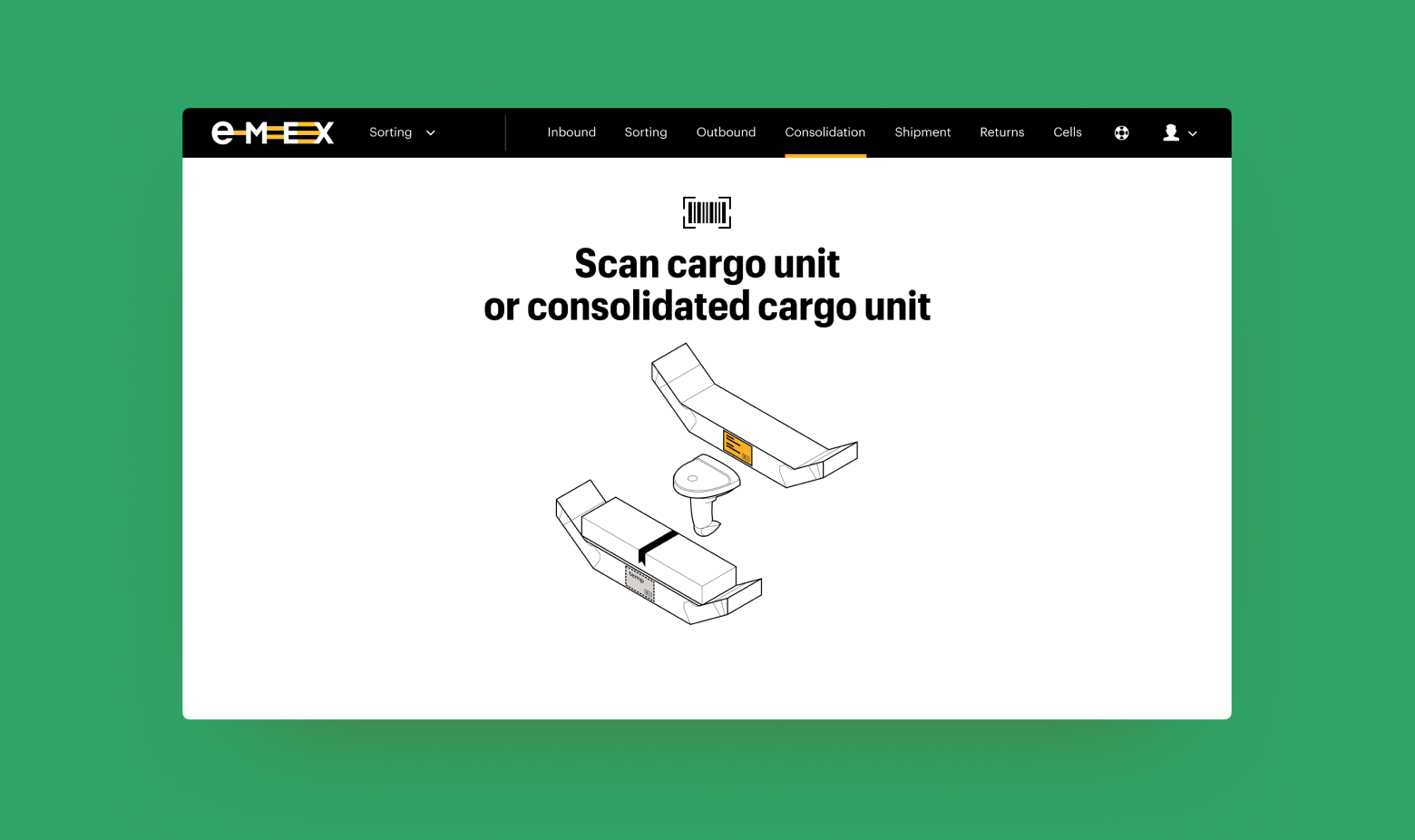
EMEX. Interface for Cargo Unit Consolidation

Logistics

Web Service

Internal UI

B2B

UX/UI Design

Desktop

Handoff
Context
The Challenge: Balancing Logistics Efficiency with Traceability
Emex is one of the largest auto parts marketplaces in Russia and manages a constant inventory of 12,000 to 13,000 SKUs across its sorting centers.
To optimize transportation, especially for air freight, the company aims to maximize cargo density. This requires ensuring that volumetric weight does not exceed physical weight. By doing so, the company prevents "shipping air" and better protects cargo from damage during transit.
Previously, cargo units were consolidated manually before loading to ensure logistics efficiency. This process created a critical blind spot because manual bundling made it impossible to scan individual goods during the loading and unloading stages. Consequently, the company could not verify shipment completeness, which led to frequent cargo loss and significant delivery delays that impacted customer satisfaction.
The goal is to design an interface that allows for efficient cargo consolidation while maintaining full traceability through every stage of the shipping process.
I worked on this project as the sole Product Designer, reporting to a Design Director and collaborating with a cross-functional team that included a Product Manager, Product Owner, backend and frontend engineers, and a QA specialist.
We implemented a system where consolidated cargo units are marked with unique barcode stickers. These barcodes allow the system to track shipment completeness during loading and verify that all goods are present during unloading.
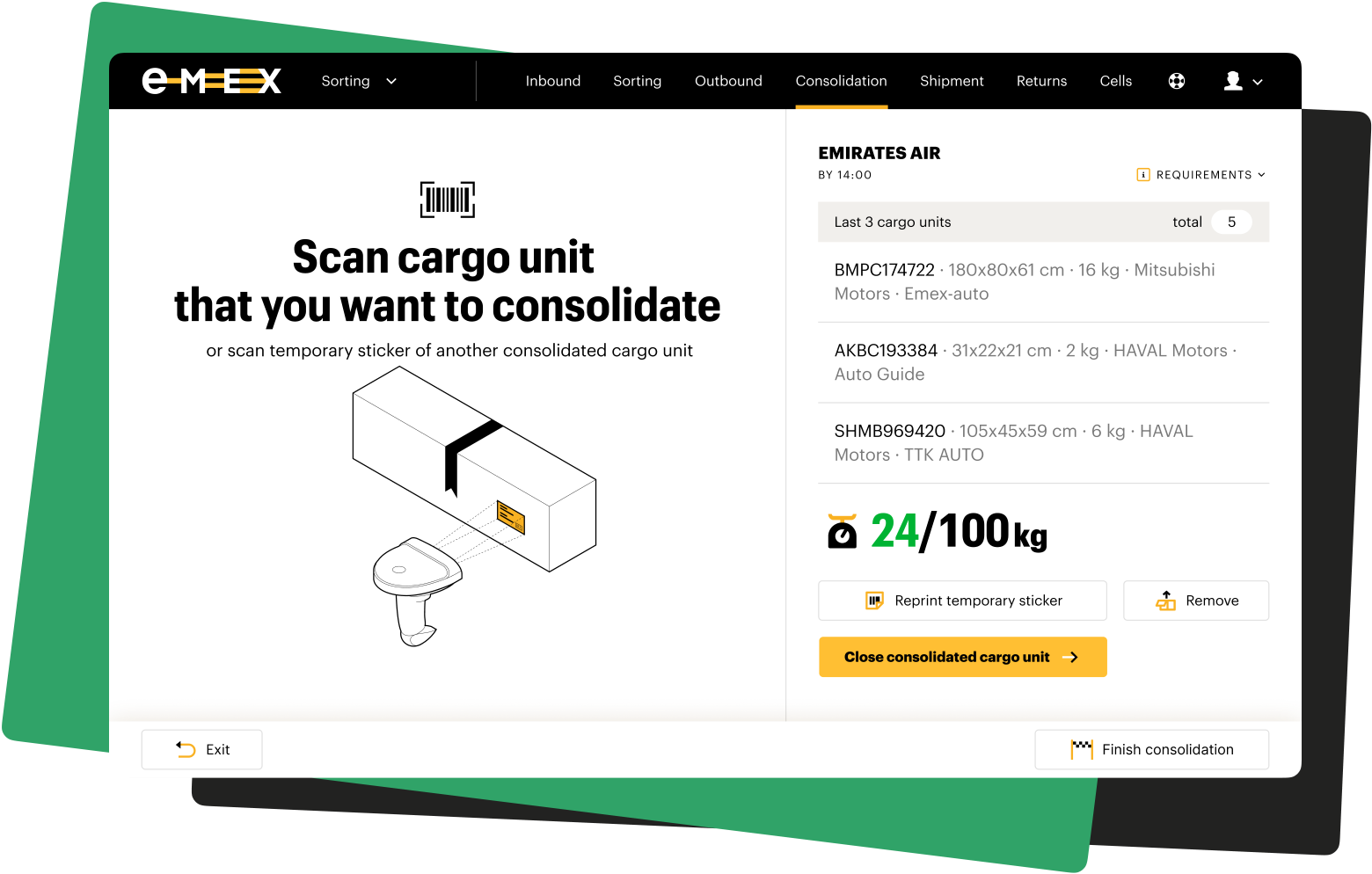
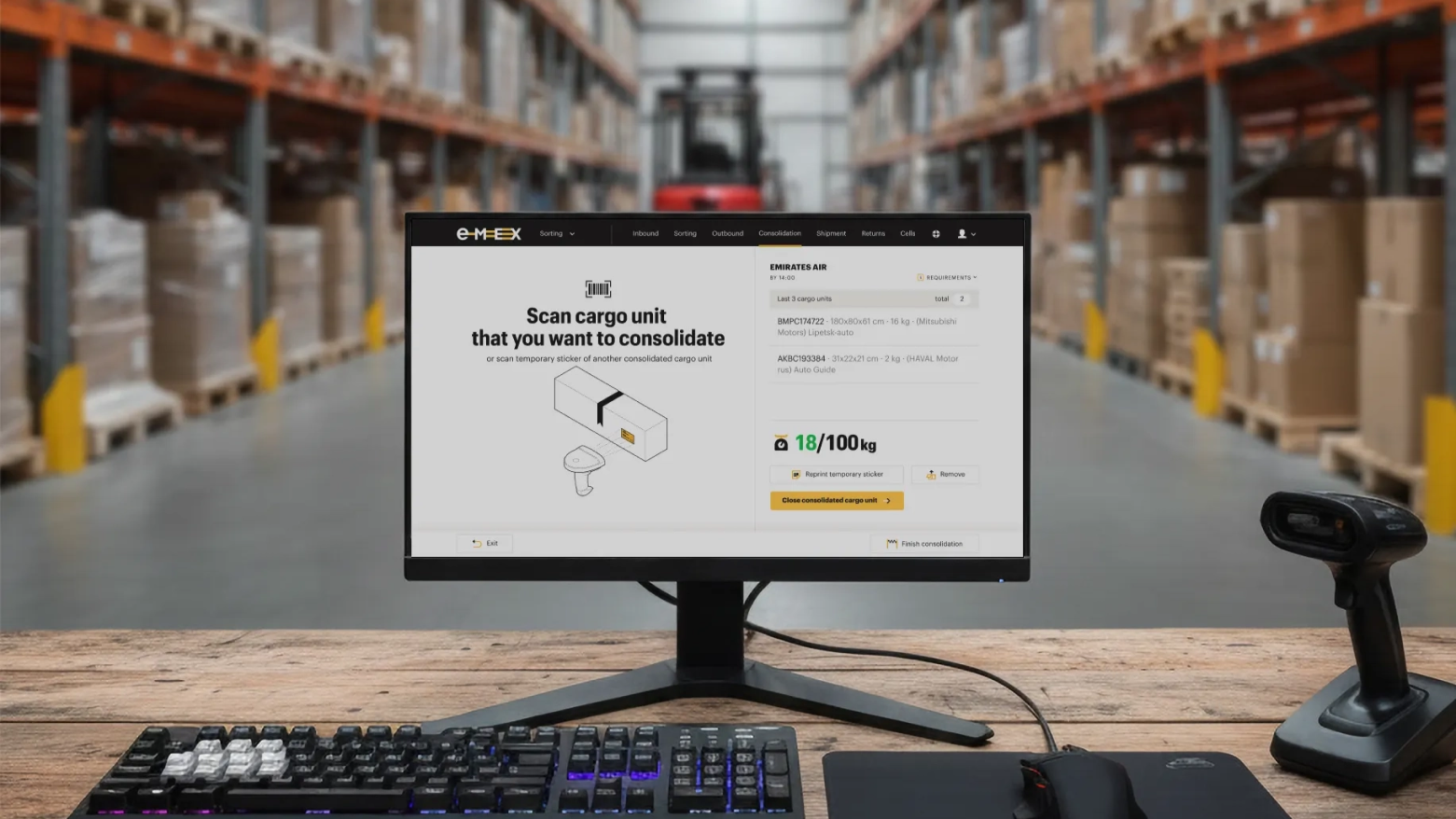
To support this process, we developed the Consolidation service, a desktop interface designed for warehouse operators who work with wireless barcode scanners.
Key features:
- Registration of consolidated units and their specific contents into the warehouse management system.
- Automatic generation of barcode labels to ensure every cargo unit is properly tagged for tracking.
- Consistency across the platform by utilizing the existing design system for all new interface components.
My Role
Solution
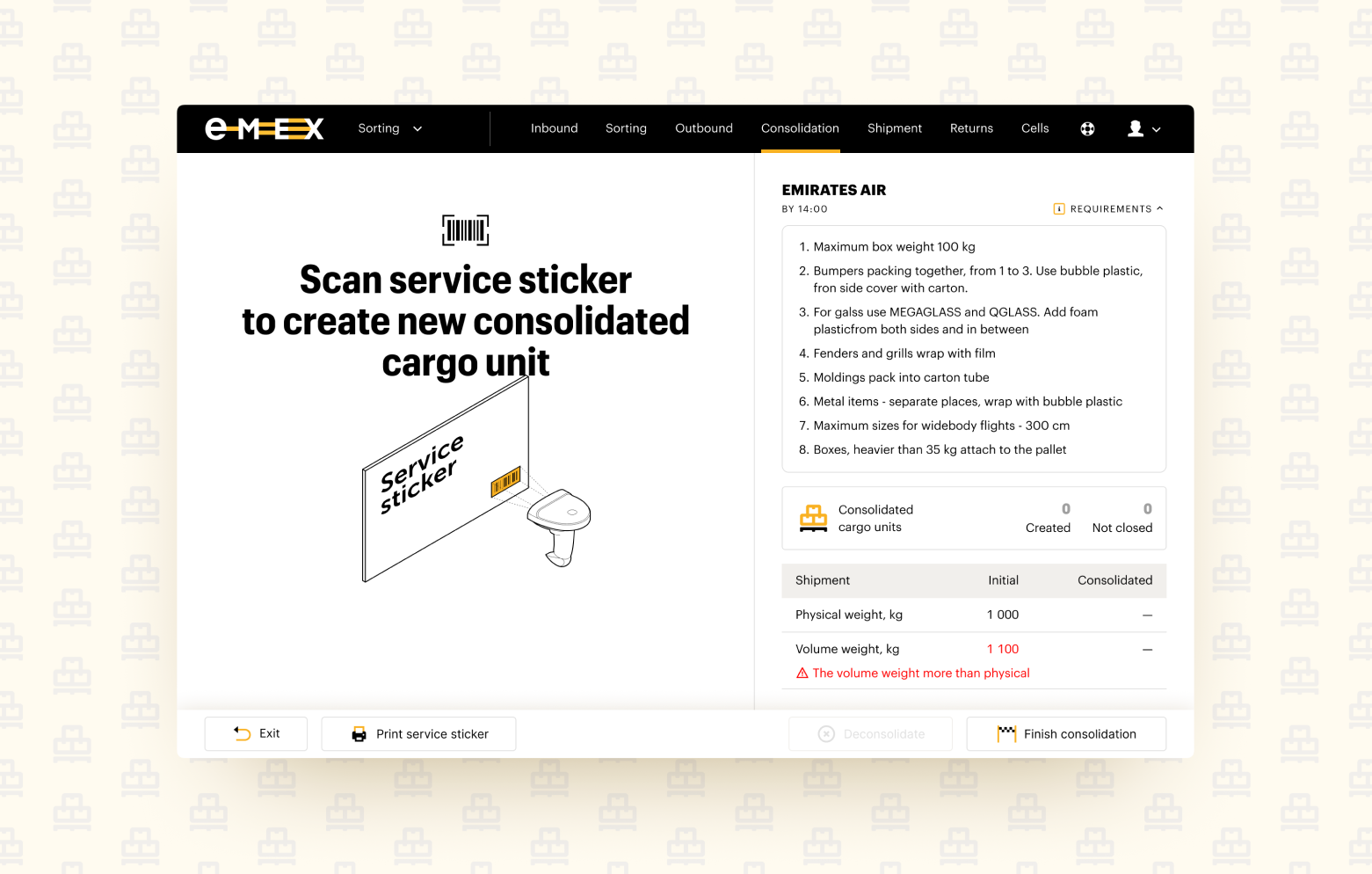
Preventing financial penalties by integrating real-time consolidation requirements from transport companies into the operator's workflow.
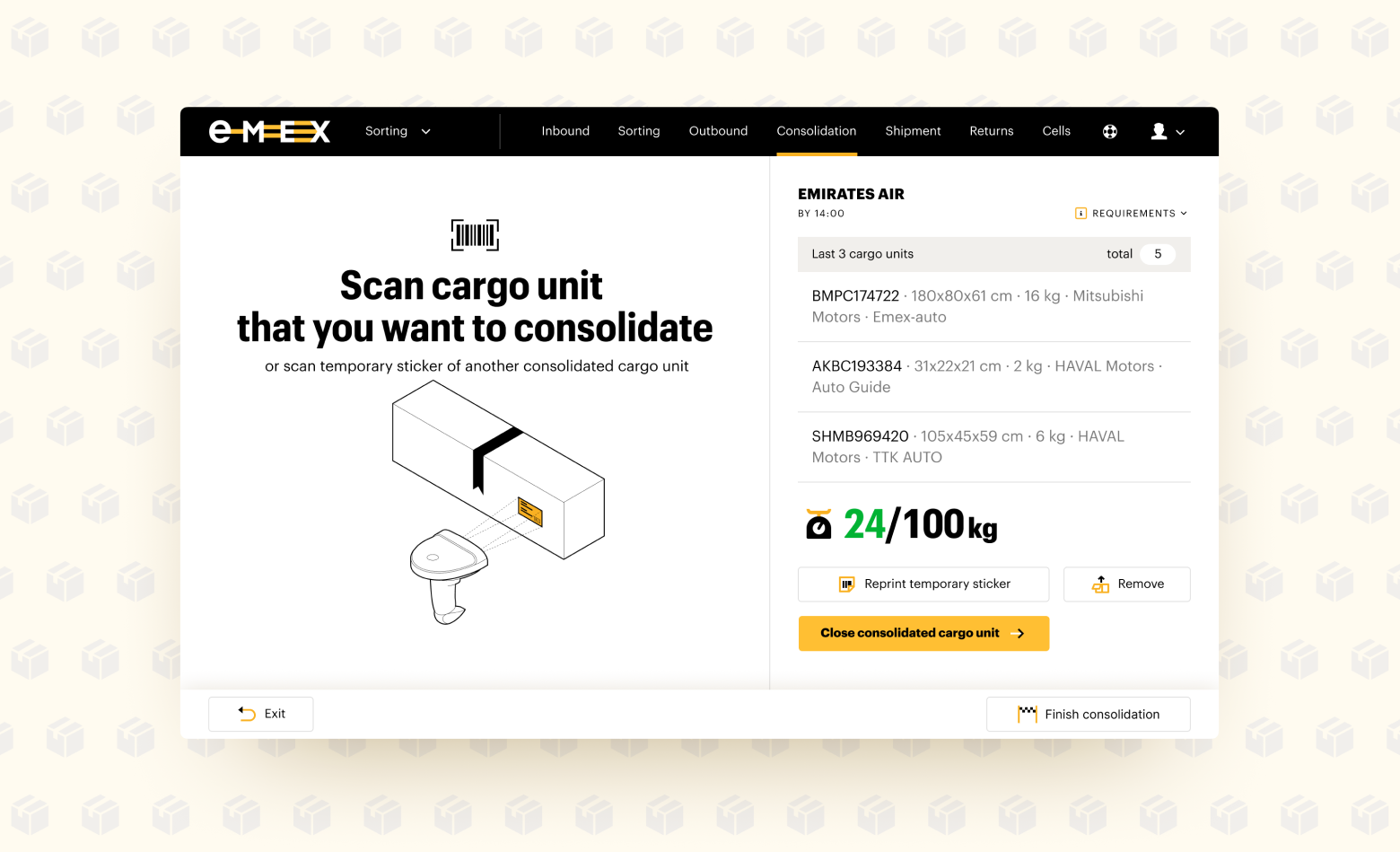
A display of the last three consolidated units to help operators maintain context and verify successful additions even if they are distracted or miss the audio confirmation.
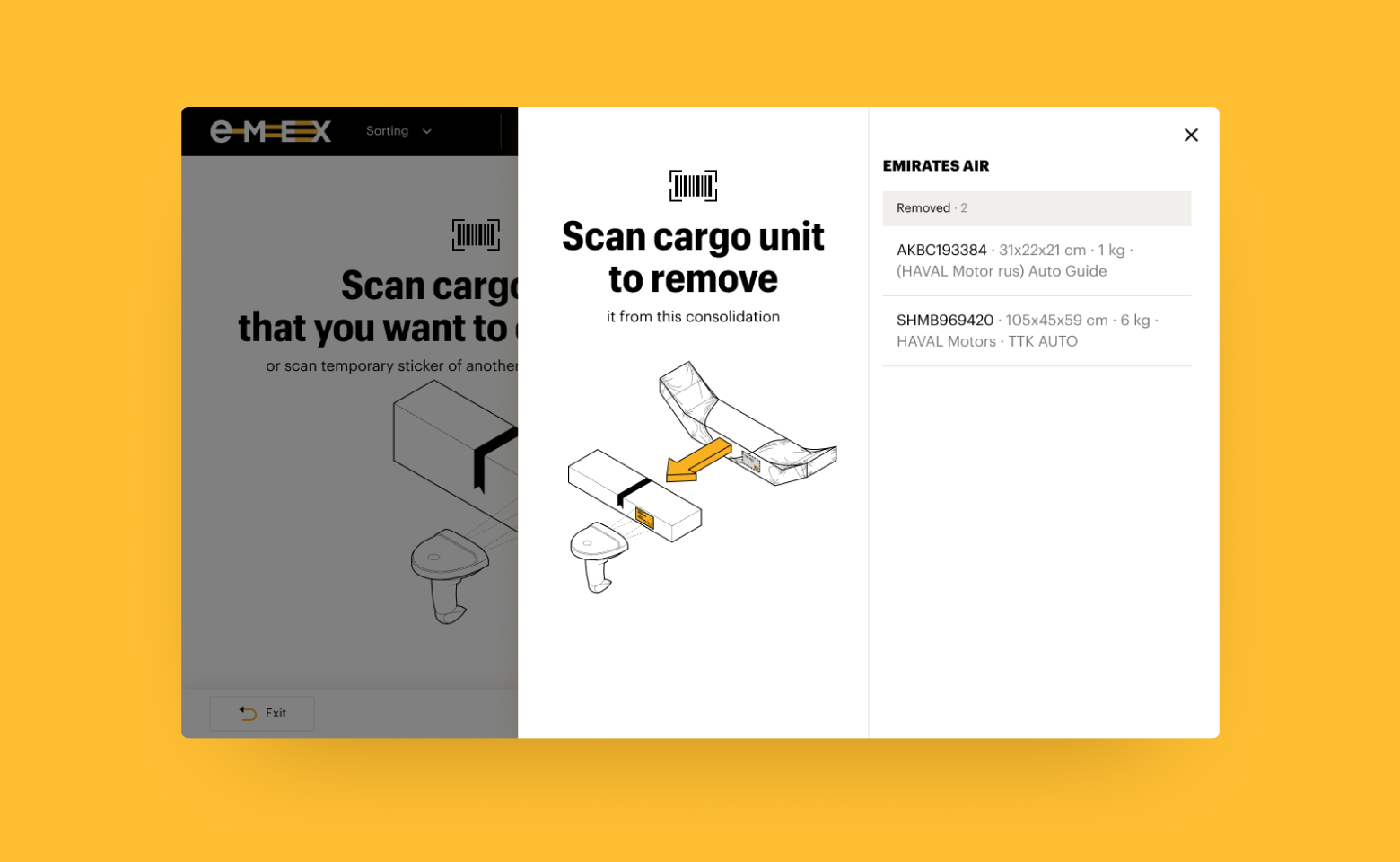
Item removal feature allows operators to subtract specific items from a consolidated unit if packaging issues or other errors occur.
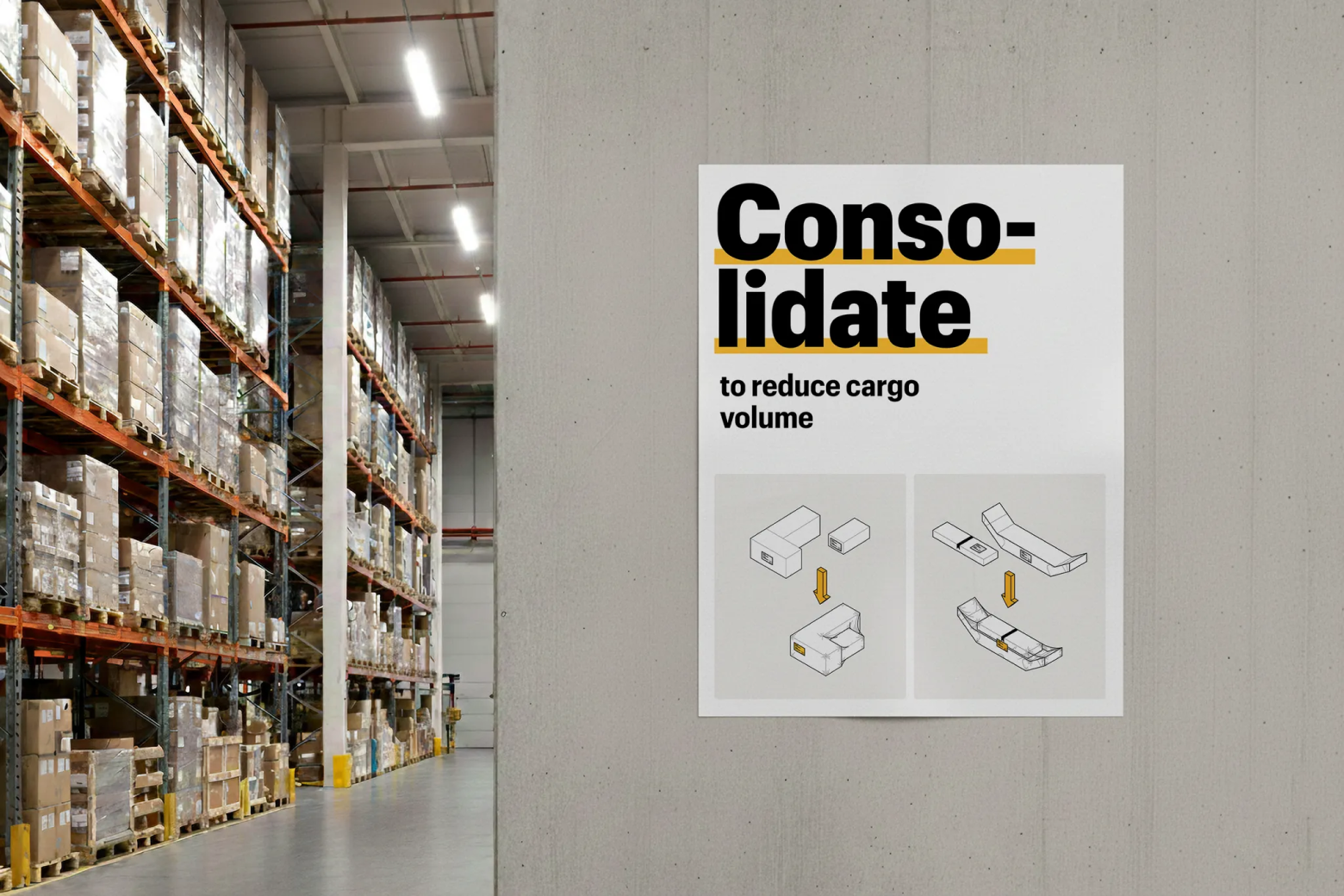
An instructional poster for the shipping zone that provides visual support for operators through clear illustrations of the most common consolidation methods.
Visual alerts that appear when volumetric weight exceeds physical to help operators understand exactly how much more the shipment needs to be consolidated.
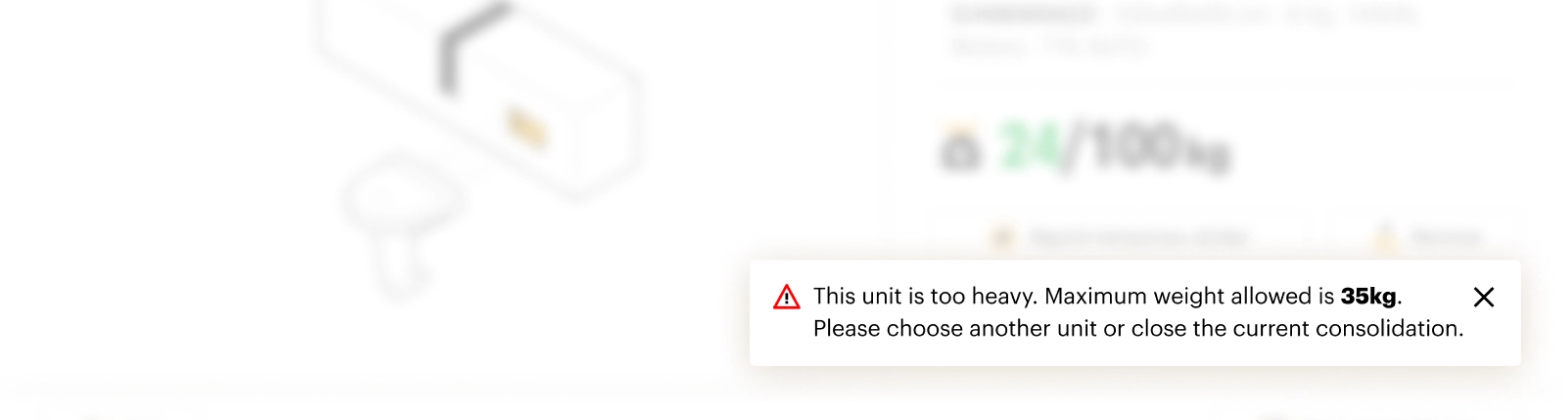
Weight limit validation. For carriers with specific weight restrictions, the interface includes a live weight counter to help operators monitor the total mass during consolidation. The system prevents the creation of overweight units by implementing a hard validation lock that displays an error message if the limit is exceeded.


Result
Reduction in cargo loss (and subsequent delivery delays) between the consolidation and shipping stages
Increase in transport loading efficiency by optimizing cargo density and volumetric weight control
~70%
~20%
Next project


Logistics

Web Service

Internal UI

B2B